The publisher's official website provides details and purchasing options.
The 8th International Edition introduces significant restructuring designed to mirror the current state of the electronics industry. As technology scales down to the nanometer level, the balance between analog and digital design shifts. The authors have meticulously updated the text to reflect these changes. 1. Earlier Introduction to MOSFETs
Accessing the offers several advantages:
Device physics, terminal characteristics, and basic biasing techniques. Part II: Analog and Digital Integrated Circuits
Which (like MOSFETs or feedback) you find most challenging
As modern electronics heavily rely on CMOS technology, the text shifts its primary weight toward MOSFETs over Bipolar Junction Transistors (BJTs). While BJTs are still covered comprehensively, the order and depth emphasize sub-micron CMOS fabrication and design constraints. 3. Updated Problems and Design Examples
Over half of the problems and examples are updated or entirely new. The text emphasizes open-ended design problems. These exercises challenge students to select component values while balancing power consumption, silicon area, and frequency response constraints. Key Topic Breakdown
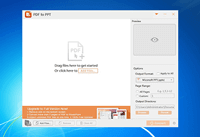
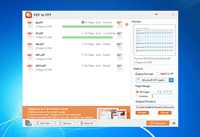
Spend less time retyping, easily move the contents from PDF files to editable Powerpoint documents.


The publisher's official website provides details and purchasing options.
The 8th International Edition introduces significant restructuring designed to mirror the current state of the electronics industry. As technology scales down to the nanometer level, the balance between analog and digital design shifts. The authors have meticulously updated the text to reflect these changes. 1. Earlier Introduction to MOSFETs
Accessing the offers several advantages:
Device physics, terminal characteristics, and basic biasing techniques. Part II: Analog and Digital Integrated Circuits
Which (like MOSFETs or feedback) you find most challenging
As modern electronics heavily rely on CMOS technology, the text shifts its primary weight toward MOSFETs over Bipolar Junction Transistors (BJTs). While BJTs are still covered comprehensively, the order and depth emphasize sub-micron CMOS fabrication and design constraints. 3. Updated Problems and Design Examples
Over half of the problems and examples are updated or entirely new. The text emphasizes open-ended design problems. These exercises challenge students to select component values while balancing power consumption, silicon area, and frequency response constraints. Key Topic Breakdown



 PDF Printer
 Air Printer
 PDF Scanner
 Photo to PDF
 Flyingbee Reader
 PDF Merger
 PDF Splitter
 PDF Compressor
 PDF Password Remover
 PDF Encryptor
 PDF Converter
 PDF to Word
 PDF to Powerpoint
 PDF to Excel
 PDF to Text
 PDF to JPEG